Brazil
1958 1962 1970 1994 2002
The record holder. Brazil's 5 titles span 44 years and four different continents as host. The 1970 squad is universally considered the greatest football team ever assembled — Pelé, Garrincha, Tostão, Rivelino, Jairzinho. Only Brazil has competed at every single World Cup (22 of 22). Ronaldo (15 goals) and Pelé (12) are among the top 5 all-time scorers.
Germany
1954 1974 1990 2014
Germany's 4 titles are separated across three different eras: 1954 Miracle of Bern; 1974 Total-Football era; 1990 Reunification era; 2014 Maracana. The 7–1 semi-final destruction of host Brazil in 2014 is the most shocking scoreline in World Cup history. Miroslav Klose holds the all-time scoring record with 16 goals.
Italy
1934 1938 1966 2006
Italy are the only nation to win consecutive World Cups (1934, 1938) under coach Vittorio Pozzo — the only manager to win two World Cups. The 1982 Naranjito campaign, led by Paolo Rossi's hat-trick against Brazil, remains one of the greatest sporting comebacks. Italy also holds the record for goalless draws at World Cups.
Argentina
1978 1986 2022
Maradona in 1986 and Messi in 2022 — Argentina's three World Cups are defined by individuals. The 2022 final against France in Qatar is widely considered the greatest World Cup match ever played: 3–3 after 120 minutes, Argentina winning 4–2 on penalties. Messi scored twice including a penalty.
France
1998 2018
France's 1998 win on home soil — Zidane heading twice in a 3–0 final rout of Brazil — launched a golden era. The 2018 win in Russia, 4–2 over Croatia, was France's most comprehensive final performance. Kylian Mbappé became the second teenager after Pelé to score in a World Cup final in 2018, then scored a hat-trick in the 2022 final in defeat.
Uruguay
1930 1950
Uruguay won the inaugural 1930 tournament on home soil, defeating Argentina 4–2 in the final. The 1950 Maracanazo — beating host Brazil 2–1 in front of 200,000 fans at the Maracanã — remains the most seismic upset in football history. Uruguay have not reached a World Cup final since, though they reached the semi-finals in 2010.
England
1966
England's only World Cup came on home soil at Wembley. The 4–2 victory over West Germany — Geoff Hurst's hat-trick including the disputed third goal — is the most famous match in English football history. Fifty years on, England's wait continues. They reached the semi-final in 2018 and 2022 quarter-finals.
Spain
2010
Spain's solitary triumph came in South Africa 2010 — the first time a European team won a World Cup outside Europe. Andrés Iniesta's extra-time goal beat the Netherlands 1–0. Spain played Total Football under Vicente del Bosque, reaching 2010 as European champions, winning it all, and defending the European title in 2012.
Which nations have won the FIFA World Cup and why?
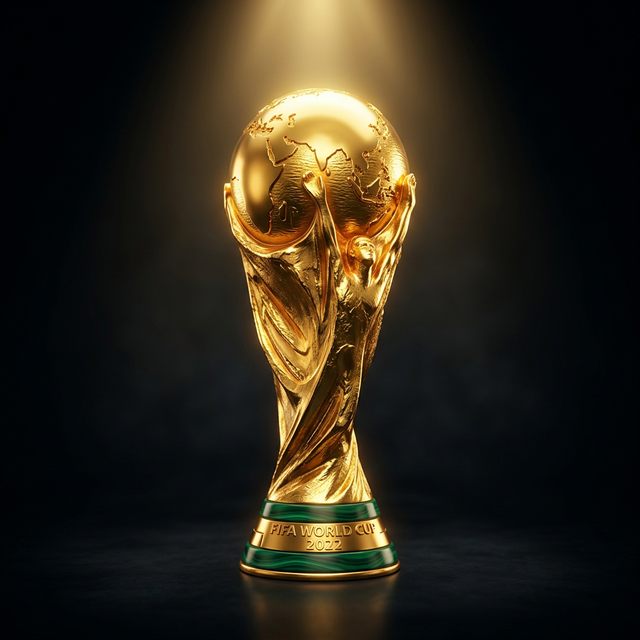
The FIFA World Cup has been won by just 8 nations in 22 tournaments since 1930. The pattern is striking: only European and South American nations have ever lifted the trophy. The best result by an African nation is Morocco's semi-final in 2022; the best by an Asian nation is South Korea's semi-final in 2002.
Brazil's 5 wins make them the standout champions across all eras. Germany and Italy, both on 4, are the dominant European nations. World Cup records show that Brazil has also competed at every single edition — the only nation with a 100% appearance rate. See our FIFA World Cup champions history.
The 2026 FIFA World Cup marks the first edition with 48 national teams competing across 16 cities in Canada, the United States and Mexico. With 104 matches scheduled from June 11 to July 19, 2026, this tournament sets a new record for the largest World Cup in history. Three host nations competing simultaneously creates a cross-border sporting event unlike anything football has seen before. BC Place in Vancouver, BMO Field in Toronto and the Estadio Azteca in Mexico City are among the most iconic venues on the roster.
Canada's inclusion as a host nation adds particular significance for North American football. The Canadian men's national team qualified for a World Cup for the first time since 1986, and the home advantage in 2026 is expected to draw record crowds at BC Place and BMO Field. Alphonso Davies remains the most recognized face of Canadian football internationally, having established himself at Bayern Munich before his move to Real Madrid in 2025.
Group stage matches are distributed across all three host countries, with knockout rounds moving progressively toward the MetLife Stadium in New Jersey, which is set to host the final on July 19, 2026. Capacity: 82,500. The United States will host the majority of matches, 60 out of 104, including all matches from the quarterfinals onward. FIFA confirmed the full match schedule in February 2025 following the completion of the draw in Miami.
 Brazil
 Germany
 Italy
Italy Argentina
 France
 Uruguay
 England
 Spain
Spain


